RosettaCon2010

Website: RosettaCon
Dates: August 3-6, 2010
Spaces Remaining: 12
Location:
Sleeping Lady Mountain Retreat
Leavenworth, WA
Registration deadline: May 1, 2010
Contact us for details

Download Rosetta

Download the Rosetta Software Suite from University of Washington's TechTransfer Digital Ventures.

Contact us for inquiries about commercial support, training, and customized versions of Rosetta.

Training Sessions

The Rosetta Design Group offers customized on-site training in macromolecular modeling with a focus on the Rosetta Software Suite.

Training sessions are typically given over a two day period and consist of a mix of instructional presentations and hands-on tutorials. The agenda for training sessions is designed in collaboration with your group to make the most of our visit.

Contact us for more information.
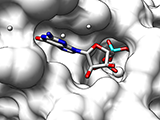
Ligand Binding

The Rosetta Design Group performs research and development in computational modeling of macromolecules privately and on a contract basis.

Custom tailored training services with an emphasis on the Rosetta Software Suite are also offered.

Free support is provided by the Rosetta Commons.

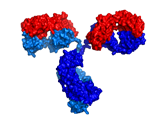
Antibody

Select Areas of Contract R&D and Training


Antibody Modeling
 
Loop Modeling
Epitope Mapping
 
Protein Design and Stabilization
Peptide Stabilization
Peptidomimetics
Peptide Design
Peptide-Protein Interactions
Homology Modeling
 
Protein-protein Interface Design
Ligand Docking
 
Protein-protein Docking
GPCR Modeling
 
Combinatorial Searches


Rosetta Commons

The Rosetta Commons consortium is a group of over a hundred international researchers from roughly a dozen universities, government labs, and the Rosetta Design Group. The purpose of the consortium is to further the research and development of the algorithms behind the Rosetta Software Suite for macromolecular modeling. Revenues from commercial licensing of the Rosetta Suite go directly towards supporting code development by funding RosettaCon, an annual gathering of consortium members, and allowing for dedicated support staff.


The Rosetta algorithms began in the lab of David Baker at the University of Washington, appearing for the first time in the scientific literature in a 1999 paper entitled, Ab Initio Protein Structure Prediction of CASP III Targets Using ROSETTA. The Critical Assessment of Techniques for Protein Structure Prediction (CASP) is a biennial competition of computational protein structure prediction technologies that continues to drive Rosetta development. Researchers in the Rosetta Commons have expanded Rosetta far beyond structure prediction, as described in many publications since Rosetta's debut in 1999.